Enterprise Integrations
Connect your applications, databases, and cloud services to create seamless workflows and unified data access across your technology stack.
What you get
- Enterprise-grade integrations connecting CRMs, ERPs, databases, and cloud services
- Governance-focused workflow automation with audit-ready data handling
- Reliable real-time data synchronization with monitoring and error recovery
- Secure API integrations with comprehensive error handling, logging, and compliance controls
What are Enterprise Integrations?
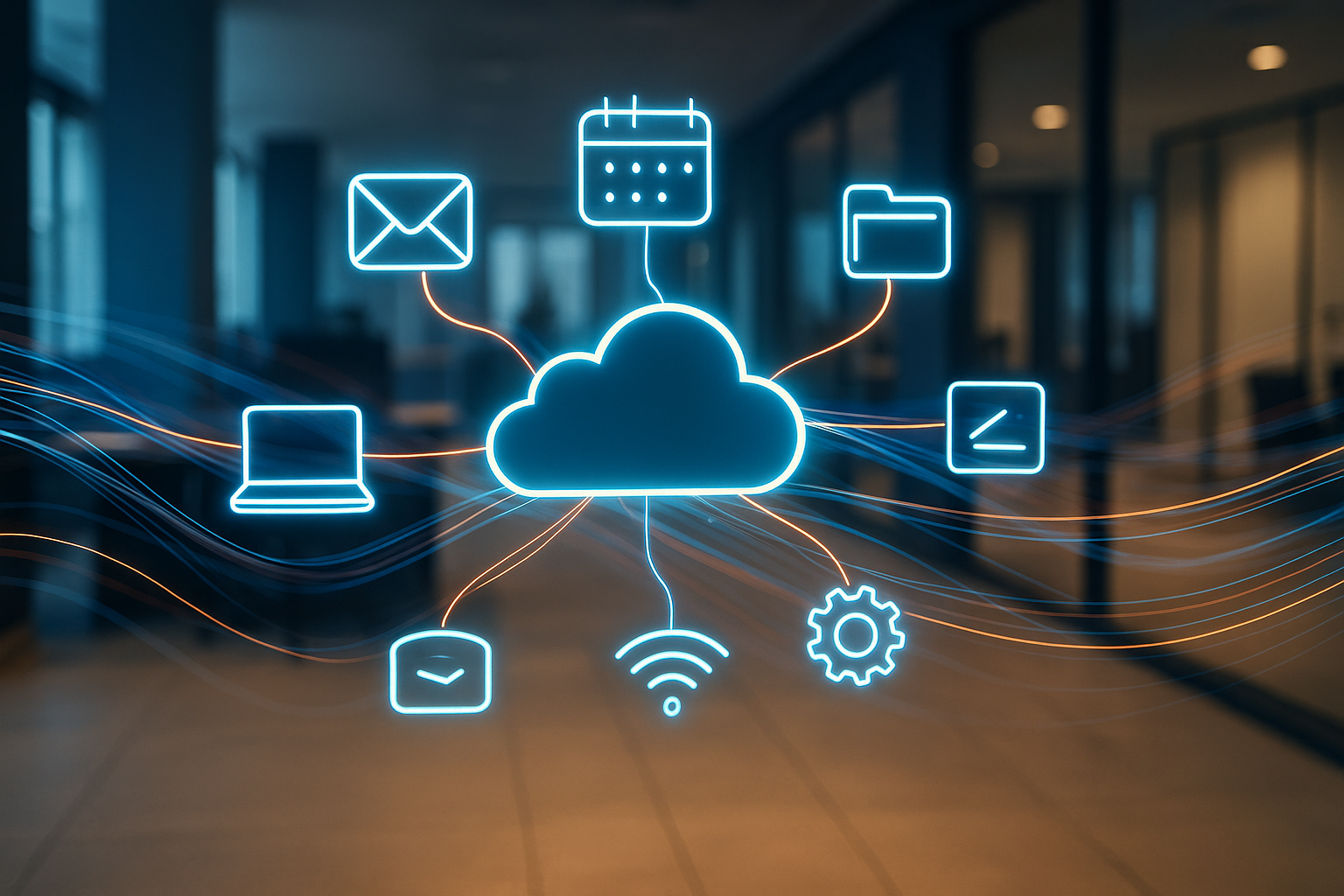
Enterprise integrations connect disparate systems, applications, and data sources to work together seamlessly. These integrations enable data flow between systems, automate business processes, and create unified experiences across your technology stack. Whether connecting on-premise systems with cloud services, linking CRM with ERP, or syncing data between databases, integrations eliminate data silos and streamline operations.
At DigitrendsAI, we design and build robust integrations that connect your applications, databases, APIs, and cloud services. Our integrations are secure, scalable, and maintainable, ensuring reliable data flow and process automation across your entire technology ecosystem.
Problems We Solve
Enterprise integrations address critical operational challenges:
- Data Silos: Break down barriers between systems, enabling unified access to information across departments and applications.
- Manual Data Entry: Automate data transfer between systems, eliminating duplicate entry and reducing errors.
- Process Inefficiency: Streamline workflows by connecting systems so actions in one application trigger processes in others automatically.
- Real-time Synchronization: Keep data consistent across systems in real-time, ensuring everyone works with current information.
- Legacy System Modernization: Connect older systems with modern cloud applications, extending their useful life without full replacement.
- Multi-Platform Coordination: Coordinate operations across SaaS platforms, on-premise systems, and cloud services seamlessly.
Our Approach
We follow a systematic approach to building reliable integrations:
- Integration Architecture: We analyze your systems, identify integration points, and design an architecture that ensures reliability, scalability, and maintainability.
- API Analysis: We review available APIs, authentication methods, and data formats for all systems involved in the integration.
- Data Mapping: We map data fields between systems, handling transformations, validations, and business rules to ensure data integrity.
- Development: We build integration middleware using appropriate technologies (REST APIs, webhooks, message queues, or integration platforms) with error handling and logging.
- Testing: Comprehensive testing ensures integrations handle edge cases, errors, and data inconsistencies gracefully.
- Deployment & Monitoring: We deploy integrations with monitoring and alerting to track performance, detect issues, and ensure reliability.
- Documentation & Support: Complete documentation and ongoing support ensure your team can maintain and extend integrations.
Common Use Cases
Enterprise integrations serve diverse business needs:
- CRM-ERP Integration: Sync customer data, orders, and invoices between CRM and ERP systems for unified customer management.
- E-commerce Backend: Connect online stores with inventory systems, payment processors, shipping providers, and accounting software.
- HR System Integration: Link HR platforms with payroll systems, time tracking, benefits providers, and employee directories.
- Marketing Automation: Integrate marketing platforms with CRM, email systems, and analytics tools for unified campaign management.
- Data Warehouse Sync: Automatically extract, transform, and load (ETL) data from multiple sources into data warehouses for analytics.
- Cloud-to-Cloud Integration: Connect SaaS applications like Salesforce, HubSpot, Slack, and Microsoft 365 for seamless workflows.
- IoT Device Integration: Connect IoT devices and sensors with business applications for real-time monitoring and automation.
Integration Technologies
We work with various integration approaches and platforms:
- REST APIs: Standard HTTP-based APIs for real-time data exchange between web services
- Webhooks: Event-driven integrations that trigger actions when events occur in connected systems
- Message Queues: Asynchronous messaging systems (RabbitMQ, Apache Kafka) for reliable, scalable data transfer
- Integration Platforms: Tools like Zapier, MuleSoft, or custom middleware for managing complex integrations
- Database Connections: Direct database connections for high-performance data synchronization
- File-based Integration: CSV, XML, or JSON file transfers for batch processing and legacy system integration
Cloud Platforms We Integrate
We have experience integrating with major cloud platforms:
- AWS (S3, Lambda, RDS, API Gateway)
- Microsoft Azure (Functions, SQL Database, Service Bus)
- Google Cloud Platform (Cloud Functions, BigQuery, Pub/Sub)
- Snowflake, Databricks, and other data platforms
- Salesforce, HubSpot, and other CRM platforms
Ready to Connect Your Systems?
Let's discuss your integration needs and create seamless connections between your systems.
Request a consultationFrequently Asked Questions
What types of systems can you integrate?
We integrate CRMs (Salesforce, HubSpot, Microsoft Dynamics), ERPs (SAP, Oracle, NetSuite), databases (PostgreSQL, MySQL, MongoDB, SQL Server), cloud services (AWS, Azure, GCP, Snowflake), payment gateways, email platforms, and custom APIs. We can connect virtually any system with an API or database access.
How long do integration projects typically take?
Simple point-to-point integrations take 2-4 weeks. Multi-system integrations with data transformation and workflow automation take 4-12 weeks. Enterprise-wide integration platforms with complex business logic can take 3-6 months. Timeline depends on system complexity, data volume, and customization requirements.
How do you handle data security and compliance in integrations?
We implement security best practices: encrypted data transmission (TLS/SSL), secure authentication (OAuth, API keys, certificates), data encryption at rest, access controls, and audit logging. We also ensure compliance with GDPR, HIPAA, SOC 2, and other regulations as required by your industry.
Can you integrate legacy systems that don't have modern APIs?
Yes. We work with legacy systems through database connectors, file-based integrations (CSV, XML, EDI), screen scraping, middleware platforms, or by building custom API wrappers. We assess each legacy system to determine the best integration approach.
Do you provide real-time or batch data synchronization?
We support both. Real-time integrations use webhooks, event-driven architectures, or polling for immediate data updates. Batch integrations run on schedules (hourly, daily) and are ideal for large data volumes or systems that don't support real-time. We choose based on your business needs and system capabilities.
What happens if one system in the integration goes down?
We build resilient integrations with error handling, retry logic, queue systems, and fallback mechanisms. Failed transactions are logged and can be retried automatically. We also set up monitoring and alerts to notify you of integration issues immediately, ensuring minimal disruption to your operations.
Can you help with data migration between systems?
Yes. We handle data migration projects: mapping data fields, transforming data formats, validating data quality, running test migrations, and executing the final migration with rollback plans. We ensure data integrity and minimal downtime during the migration process.
Do you provide ongoing monitoring and support for integrations?
Yes. We offer monitoring dashboards, alerting systems, and maintenance plans. We track integration health, data flow, error rates, and performance metrics. We also provide support for troubleshooting, updates when systems change, and enhancements as your integration needs evolve.
Related capabilities
Enterprise integrations rely on cloud platforms, automation workflows, and intelligent agents to connect systems effectively.
Cloud Integrations
Connect enterprise systems with AWS, Azure, GCP, and other cloud services.
Automation
Automate data flows and workflows between integrated systems.
AI Agents
Intelligent agents that orchestrate complex integration workflows.
Related Services
Custom Apps
Build applications that integrate seamlessly with your systems.
AI Chatbots
Connect chatbots with your business systems and knowledge bases.
All Services
Explore our complete range of development services.